Concrete sidewalk building in Sunnyvale CA - a firm, level walk on a solid base
Cracked, sinking or uneven walk out front? We dig out, pack a firm base and pour a new walk that sits flat and drains.
Request an estimate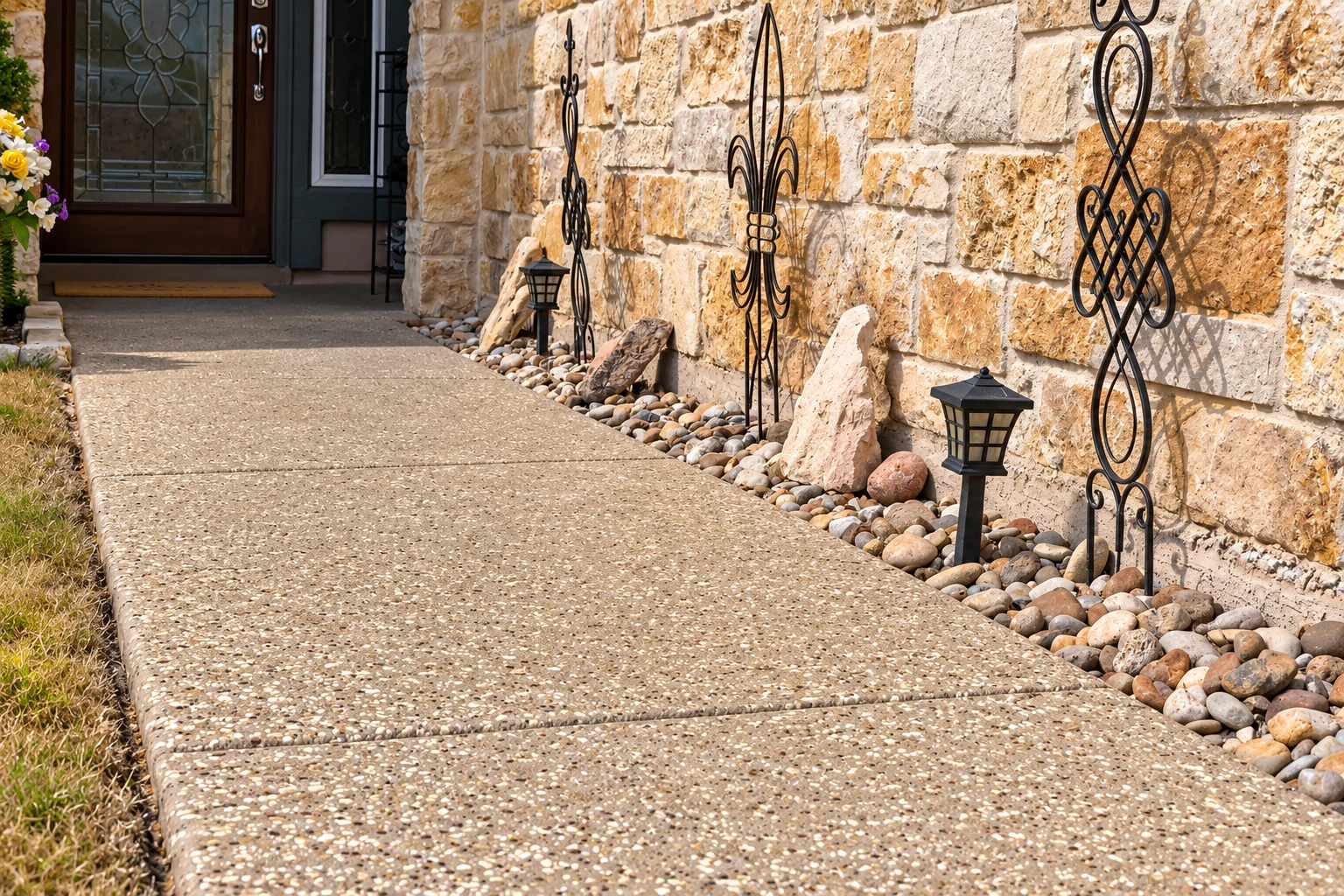
What does it take to build a new concrete sidewalk in Sunnyvale?
Concrete sidewalk building in Sunnyvale means taking out the old walk or the topsoil and any soft spots, packing a firm base and pouring a new concrete slab on it, so you end up with a walk that stays flat and solid underfoot.
Most of the walks I'm asked to look at have lifted, cracked or started tipping toward the lawn, and some owners simply want a real walk where there's only a worn path. The price mostly follows the size of the walk, whether old concrete has to be broken out and hauled away, how much soft ground we find under it, and whether cars cross it, because those spots have to be built heavier. The schedule depends more on where the walk runs, since a walk close to the street can bring the city into the job, and on the weather around the day of the pour. After I've seen the walk, you get the scope and the price in writing, so you're working from your own figure rather than a guess.
How our concrete sidewalk building goes, step by step
Before anything else, I look at where the walk runs and how close it comes to the street, because that decides who we need to speak with at the city, and I ask where cars will cross it so those spots are built to take the weight. When the work starts, our crew breaks out any old concrete and digs out the topsoil and soft spots down to firm ground, then packs the subgrade, which is the soil and fill the slab sits on, so the walk doesn't settle along with loose dirt. We set the forms so the finished walk falls away from the house and water runs off instead of pooling, place rebar, steel bars that help hold the slab together, where it's needed, and pour in the cooler part of the day so the top doesn't dry too fast and turn weak and dusty later. We give it a broom finish, a light brushed texture that keeps feet from slipping when it's wet, cut control joints, shallow grooves that give the slab a straight place to crack instead of a random one, and then let it cure, the slow hardening that gives concrete its strength, before anyone uses it. If the budget is tight, I'd ask you to keep the base and choose a plainer finish, because nobody sees the base on the first day, but it's the part that decides whether the walk stays flat.
A walk usually connects to something else, so it's worth planning the pieces together. If the walk ends at a garage whose slab has cracked or dropped, we can plan garage floor concrete alongside it so the two meet without a lip. If you'd like more than plain gray at the front of the house, decorative concrete can add color or pattern to the walk, and we build the base underneath it the same careful way.
Concrete sidewalk building in Sunnyvale, from the curb in
In Sunnyvale, the first question on a front walk is whether it sits on the city's side of the line. The city counts its right-of-way from the face of the curb about 11 feet into your property, depending on the size of the street, so a walk near the street may well be inside it. In many older neighborhoods there's a planting strip with the street tree between the curb and the sidewalk, while newer neighborhoods have the curb, gutter and sidewalk as one piece, which changes where we can cut and how we tie a new walk in. If you're thinking of paving that strip, keep in mind that the city plants street trees in front of homes, with some exceptions, and it's up to you to remove any concrete in the right-of-way before it plants a new one. Whether your walk needs a permit is the city's call, so when it isn't clear we check with the city's One-Stop Permit Center at City Hall before we start, and when a permit is needed we handle the application and the inspections and keep you informed.
Away from the street side, we mostly meet two kinds of calls here, older walks lifted by roots or tipped by settling, and new walks added to reach a side gate or a wider driveway. We get the same calls on jobs in Mountain View and Santa Clara, and we build those walks the same way, base first.
Concrete walks and sidewalks
Get a written price for your Sunnyvale sidewalk
We reply to every call and message within one business day, and then we set a time for me to come out and look at the walk. The estimate is free and done on site, and afterward you get the scope and the price in writing, with no obligation to go ahead.
(669) 215-2122Sidewalk questions from Sunnyvale homeowners
Who is responsible for the sidewalk in front of my house in Sunnyvale?
Under California law, the owner of a lot that fronts a public street is responsible for keeping that sidewalk in a condition that won't endanger people or property. The exception is damage someone else causes while working under a permit or legal right. If your sidewalk has lifted or broken up, we can take out the bad sections and pour new ones on a properly packed base.
Will wire mesh stop my concrete sidewalk from cracking?
No, wire mesh and other reinforcement can't stop concrete from cracking, but placed in the right spot in the slab they can keep the cracks that do form narrow. That's why we count on firm ground underneath and the control joints we cut to decide where cracks go, and use steel to help hold them tight.
How much does a concrete sidewalk cost per square foot in the Bay Area?
A 4-inch concrete slab installed in the Bay Area usually costs about $13 to $18 per square foot. That's the usual range around here for slab work, not our price. Your own figure comes from the written estimate after I've looked at your walk.
What license does a concrete contractor need for sidewalk work in California?
In California, sidewalk work falls under the C-8 Concrete Contractor license from the state board, which covers forming, pouring, placing and finishing pavement and flat concrete work. You can ask any contractor which license they hold before you sign anything.
How long does a new concrete sidewalk need to cure?
General industry guidance is to start curing as soon as possible after the finish and keep it going for at least 3 days, with either a sprayed curing compound or damp burlap kept moist. Curing is what makes the slab durable and better at resisting cracks, so it's worth staying off the new walk until we tell you it's ready.
How do I know if accessibility rules apply to my new sidewalk?
The U.S. Access Board has published guidelines on access to sidewalks and curb ramps in the public right-of-way, so they're worth asking about if your walk sits near the curb on the city's side. If yours does, we'll raise the question when we check with the city before the work starts.
Plan your new Sunnyvale sidewalk with us
If you have the walk's rough length and width, how far it sits from the curb, and any driveway crossings or street trees in mind when you call (669) 215-2122, we can plan the visit around what matters on your walk.